A history of the War of 1812 cemetery located on Aero Drive in the Town of Cheektowaga, New York. Over 300 American and British soldiers lie buried here — casualties of illness and battle on the Niagara Frontier, interred in ground that nearly vanished from history entirely.
The Garrison Burying Ground — War of 1812 Cemetery, Aero Drive, Cheektowaga, NY
Approximately half an acre on the southwesterly side of Creek Road, with Eleven Mile Creek running parallel and adjoining — used as a burial ground for soldiers who died at the nearby General Military Hospital.
More than 300 American soldiers are believed to be interred here. In one corner lie nearly 100 British prisoners — many horribly wounded in the sortie on Fort Erie, August 14, 1814.
In 1851, Col. John Bliss and John R. Evans purchased the cemetery parcel to ensure the ground would never be disturbed. The deed was transferred to the Buffalo Historical Society on July 12, 1898.
Growing up in the area of the War of 1812 graveyard, I have always been curious about it and the history of the area surrounding it. I can remember passing it for the first time as a child and being fascinated by the old cannon and white crosses. Here are my findings.
The site for the new General Hospital was selected on 29 July 1814 on the recommendation of senior surgeon Dr. Ezekiah Bull. Some 37 hectares and the stables of Raphael Cook's farm were leased for the construction of a general hospital. Ironically, the original contract specified "no burying place in the premises."
Despite this clause, soldiers died in large numbers from illness and battle wounds. The government appears to have placed the dead on a neighboring piece of property then owned by the Holland Land Company — land that would pass through several hands over the following decades before finally being secured as a permanent memorial.
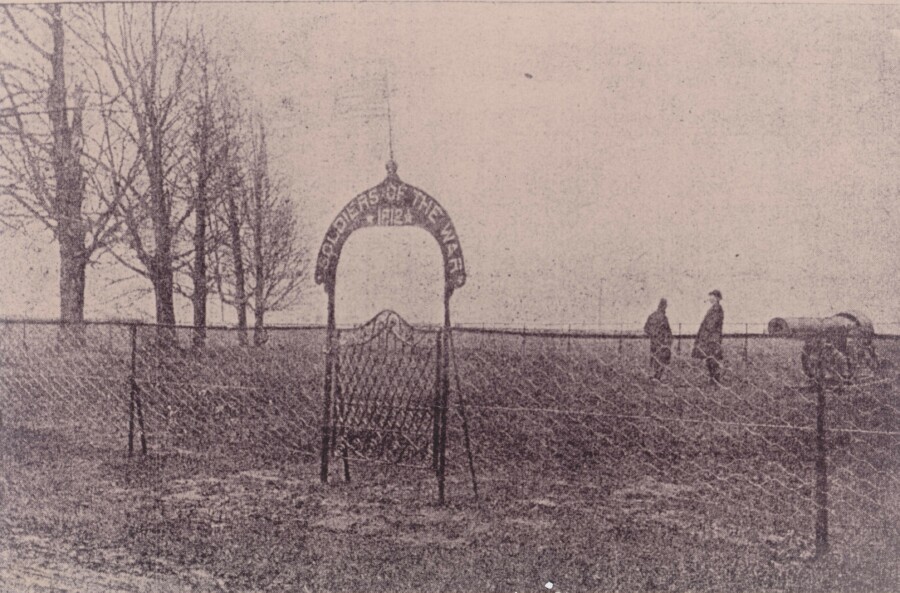
On 9 November 1898, the Buffalo Historical Society placed a Parrott Gun cannon at the cemetery, inscribed to the memory of the dead soldiers, and installed an arched gateway with the words "Soldiers of the War of 1812" cut from galvanized iron. The original cannon was donated to Bethlehem Steel on August 25, 1942 for the World War II war effort.
"The number of our own soldiers buried on this ground is supposed to be three hundred or more; and in one retired corner lie nearly one hundred of our enemies who were wounded, taken prisoners and died."
— Buffalo Cemeteries, read before the Buffalo Historical Society, February 4, 1879
Possibly the oldest known photograph of the War of 1812 Cemetery — most likely 1898 or 1899, after the estates of John Bliss and John R. Evans deeded the cemetery to the Buffalo Historical Society. Photo courtesy of David Przepiora, cheektowagahistory.com
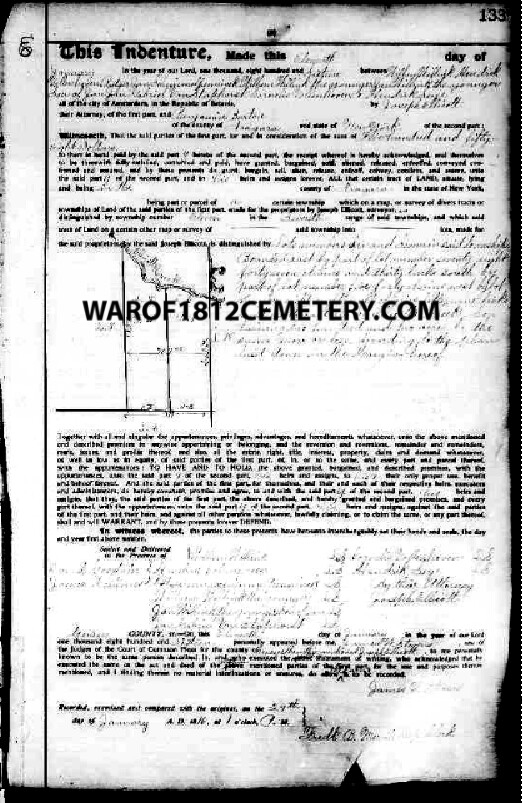
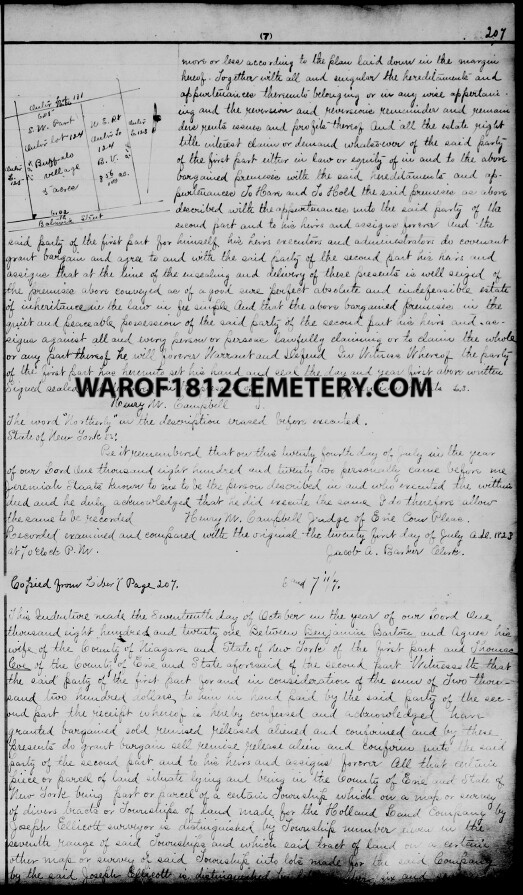
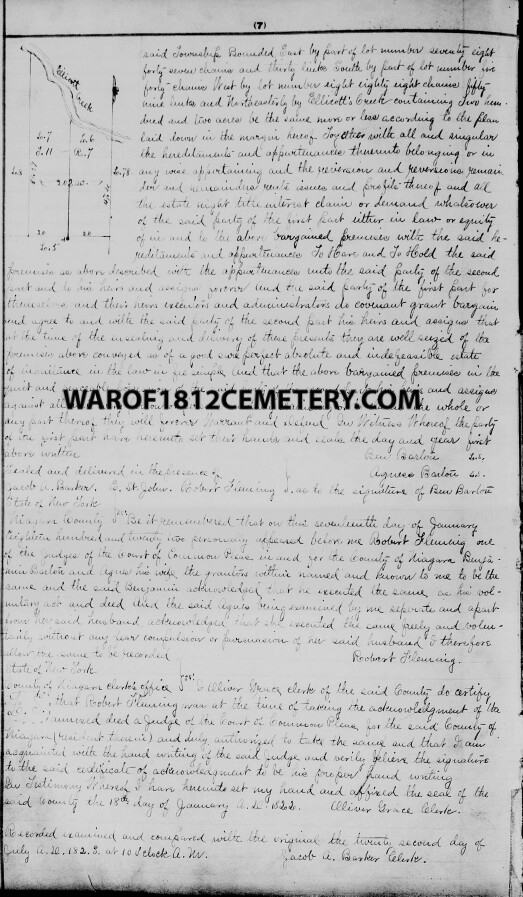
Five land transactions spanning 1816 to 1898 trace how the cemetery parcel passed from the Holland Land Company through private hands before being permanently secured as a historical site.
Wilhelm Willink et al. (Holland Land Company) sell the property containing the cemetery to Benjamin Barton. This is the first recorded land transaction for the parcel. No mention of the graveyard appears in the deed — the burial ground is not yet formally acknowledged in the legal record.
The second land transaction for the property — Barton sells the parcel containing the cemetery to Thomas Coe. The graveyard continues to exist without formal legal protection, still embedded within a broader tract of privately held land along Eleven Mile Creek.
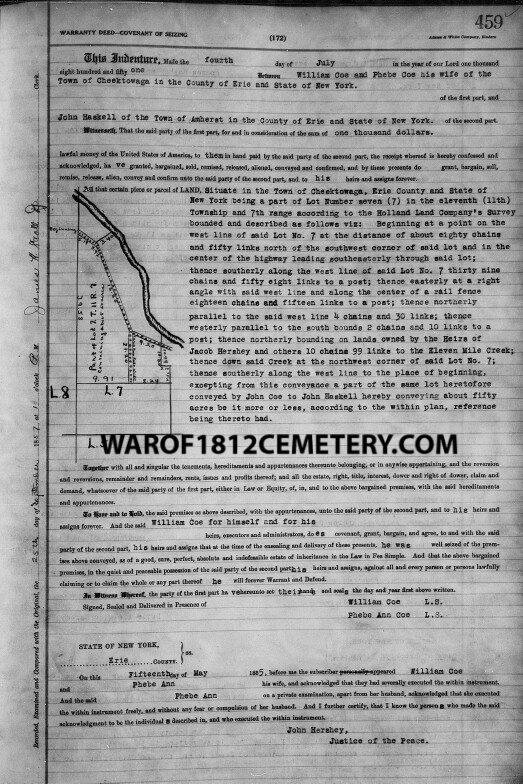
William Coe sells the property containing the cemetery to John Haskell. The third transaction to include the cemetery parcel — still without formal separation or dedicated protection of the burial ground itself. This sale sets the stage for the critical transaction that follows just one month later.
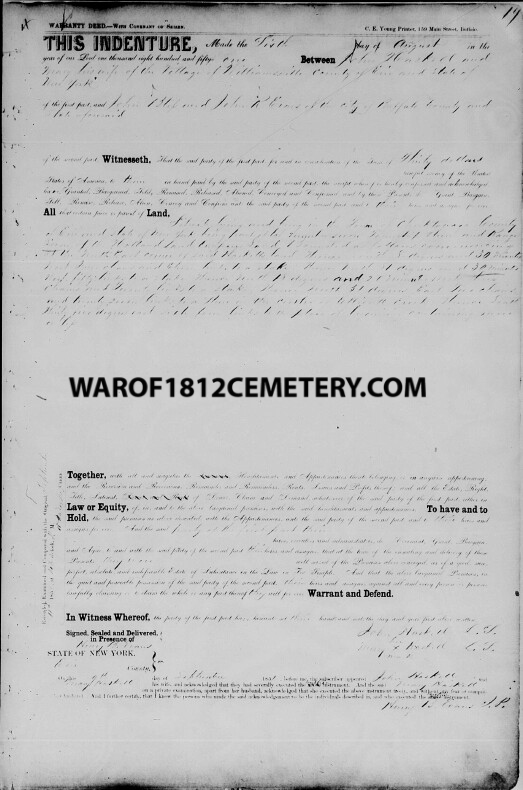
The most significant transaction in the cemetery's history. John Haskell sells the cemetery parcel only (Parcel A) to Col. John Bliss and John R. Evans — two local citizens who felt a deep duty to protect the site.
This was the last time the land was held in private hands before being deeded to the Buffalo Historical Society. For nearly fifty years, Bliss and Evans personally held the title as stewards of the burial ground.
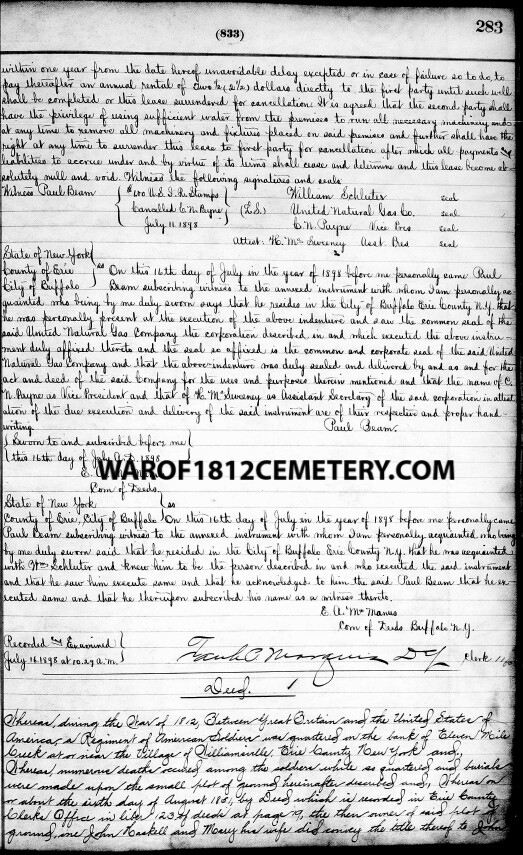
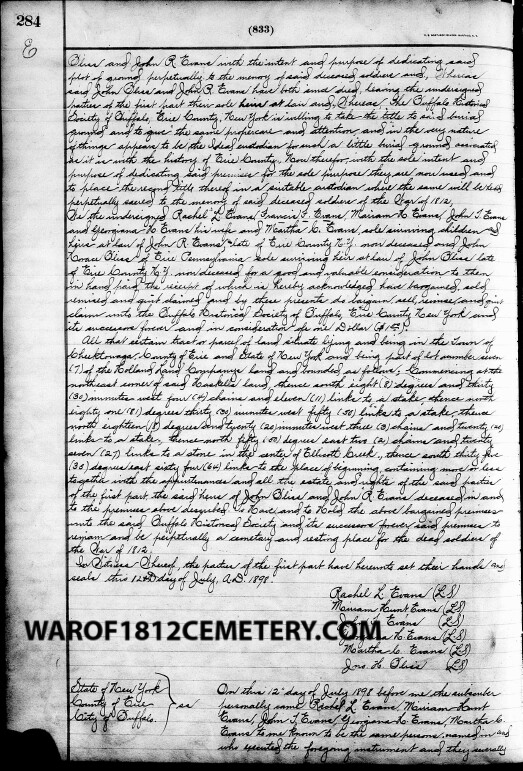
The estates of Col. John Bliss and John R. Evans deed the cemetery (Parcel A) to the Buffalo Historical Society — formally transferring stewardship of the burial ground to an institution capable of preserving it in perpetuity.
Later that year, on 9 November 1898, the Buffalo Historical Society placed a Parrott Gun cannon at the cemetery and installed the arched gateway inscribed "Soldiers of the War of 1812," marking the first formal public commemoration of the site.
The most detailed early description of the cemetery comes from an address delivered before the Buffalo Historical Society on February 4, 1879 — Buffalo Cemeteries: An Account of the Burial-Places of Buffalo, from the Earliest Times.
About six thousand of our army raised during the first year of the war of 1812–15 and sent on to protect our frontier at Buffalo, went into winter quarters at Williamsville village, eleven miles north of Buffalo. Their encampment at that place was just north of the main road, and contiguous to the village...
Sickness, as is usual in camp, prevailed among them; and some two or three hundred died and were buried on the grounds adjacent. Since then the village has spread, covering the ground where they were buried, and long since not a vestige of a grave was left to be seen.
There were quite extensive barracks built on the bank of the Eleven Mile Creek, a very healthy, eligible place; it being retired from the immediate scenes of conflict and about one mile above the village. It continued to be our General Hospital for sick and wounded soldiers during this war.
During the three years of the conflict, many of our soldiers died, and were buried at the side of a field near by. The ground that contains their remains comprises about half an acre, lying on the southwesterly side of a public road; the Eleven Mile Creek running parallel and adjoining.
Two of our townsmen, Col. John Bliss and John B. Evans, feeling an interest that this ground should never be disturbed or encroached upon, procured the title by a warranty deed from the owners, John Haskel and wife, to themselves, dated August 6th, 1851, and duly recorded.
The number of our own soldiers buried on this ground is supposed to be three hundred or more; and in one retired corner lie nearly one hundred of our enemies who were wounded, taken prisoners and died. Many of the latter were captured at the desperate sortie the British made on Fort Erie August 14, 1814, and the blowing up of the magazine.
Recently with one of the oldest residents of the town, Hon. T. A. Hopkins, I visited this burying place. There was not a slab or monument of any kind to be seen to designate the graves. Only the uneven hillocks marked the spot that contains the bones of our unhonored dead.
On the border of two sides stand ten sugar maple trees, from one and one-fourth to two feet in diameter; all but one in a fine healthy condition. I have no doubt they were planted there by the comrades of those whose bones now occupy this ground.
Our Government ought to erect at this beautiful retired place a suitable monument to their memory and provide for removing thither the skeletons of others, when found in excavating in the village.
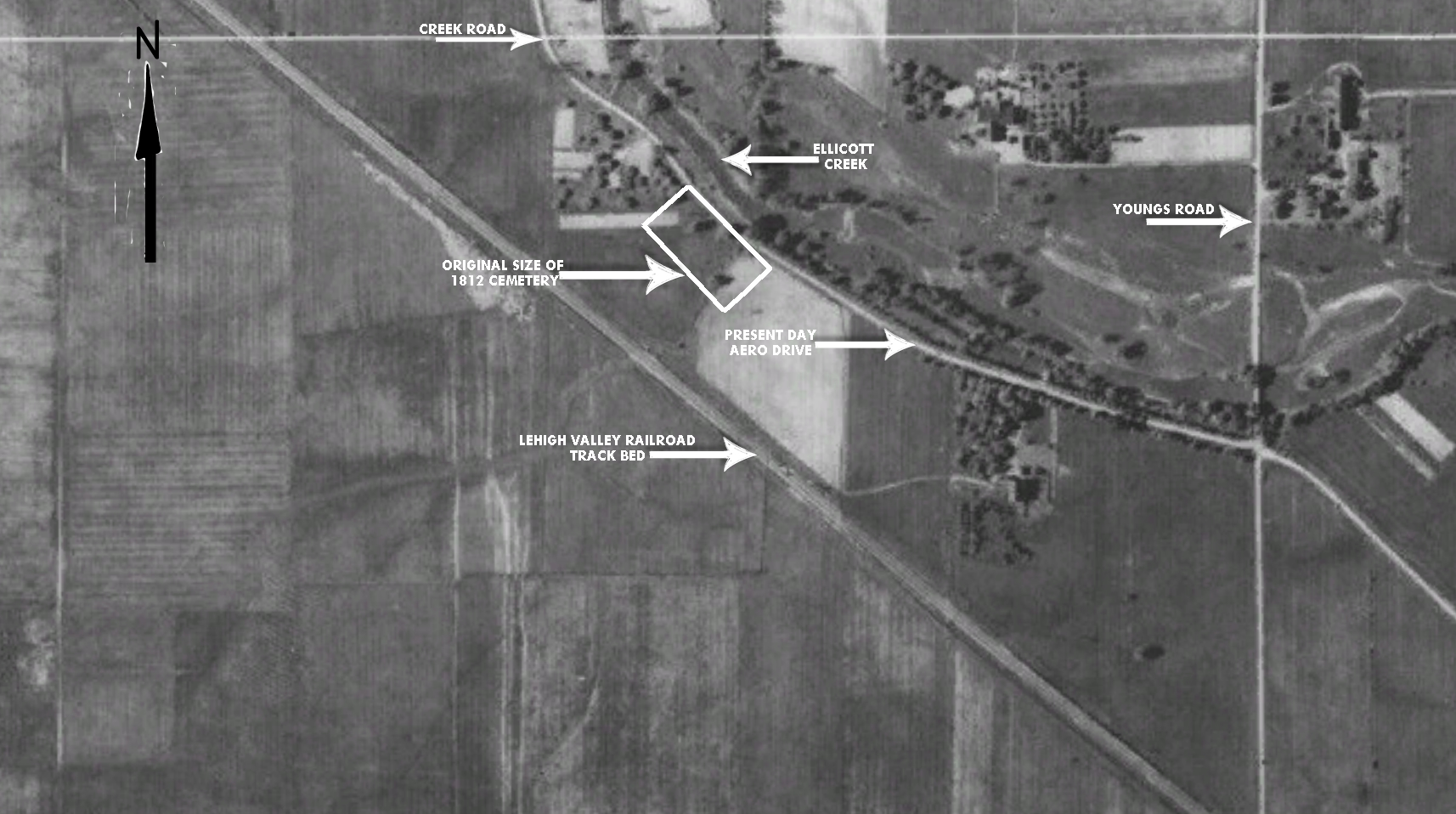
Buffalo Cemeteries: An Account of the Burial-Places of Buffalo, from the Earliest Times — read before the Buffalo Historical Society, February 4, 1879Historical maps and aerial photographs document how the cemetery site has changed — and endured — over more than a century, including the original sugar maple trees described in the 1879 account.
The cemetery marker indicates the location of the cannon at present time. Three of the original ten sugar maple trees planted by the soldiers' comrades are still visible. The black dot at the yellow line is believed to be the Parrott Gun installed in 1898 by the Buffalo Historical Society.
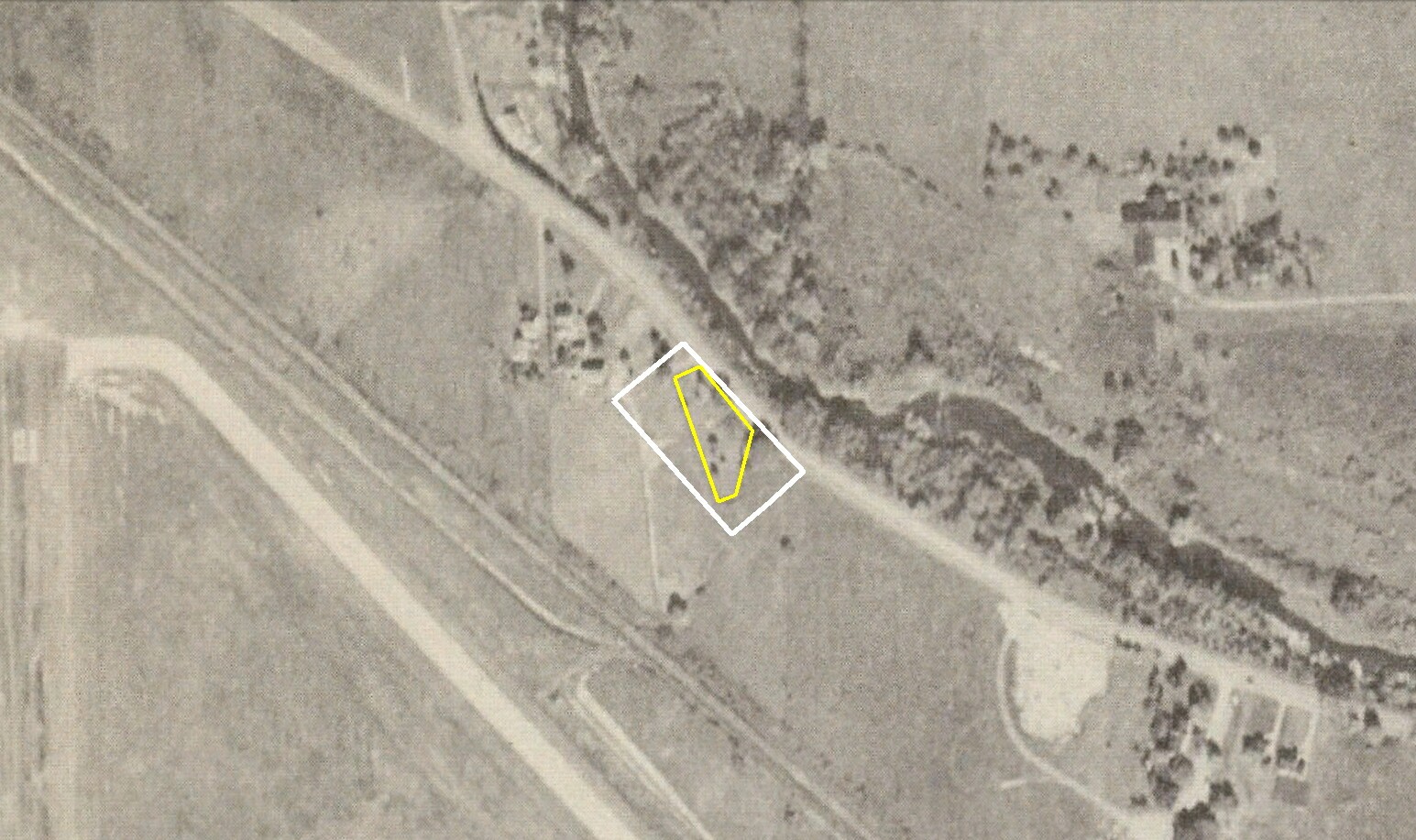
The 1951 aerial image shows the original cemetery outline with the 1951 boundary overlaid inside it — illustrating how the recognized footprint of the cemetery had contracted relative to the original burial ground by the mid-twentieth century.
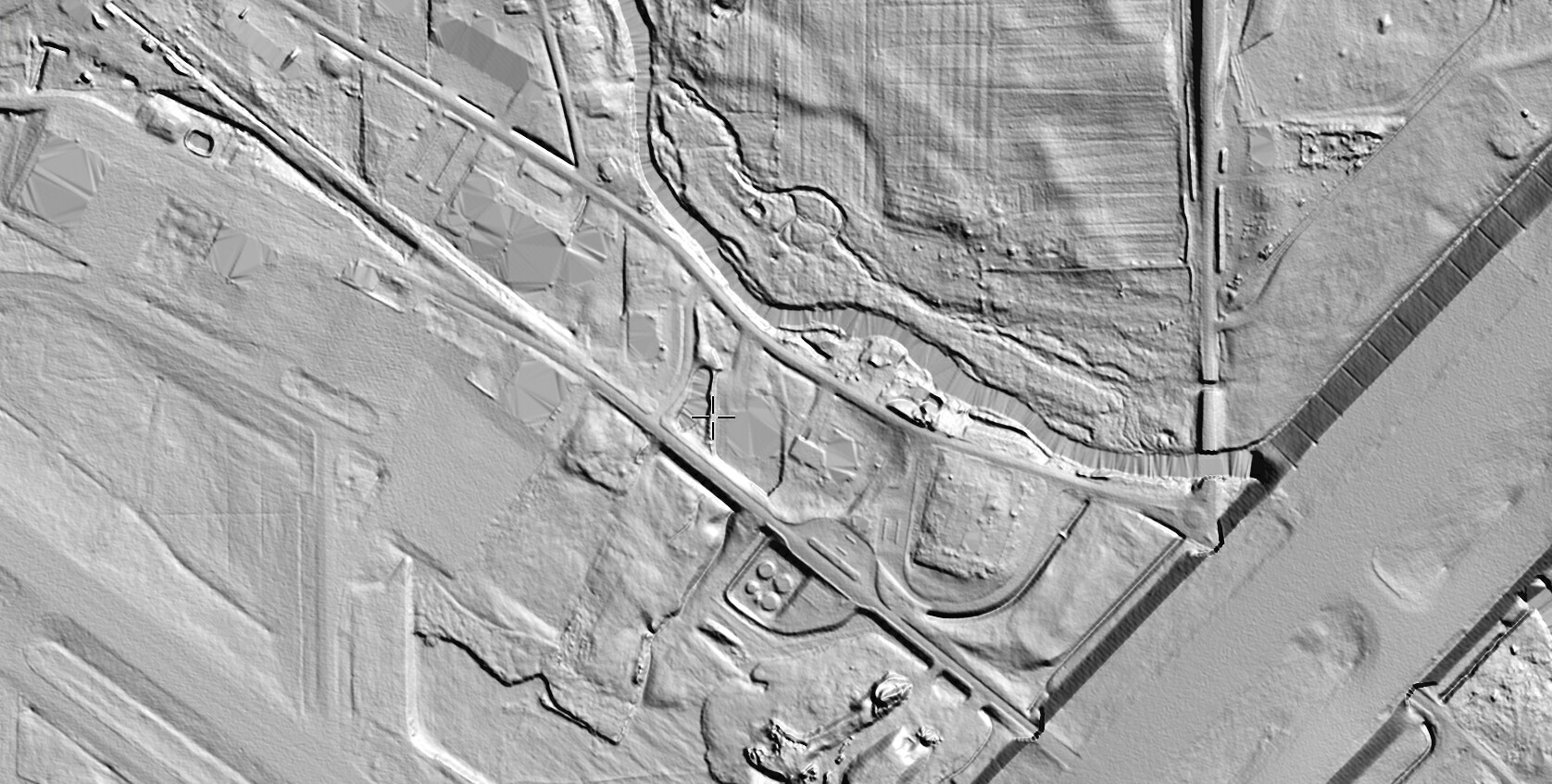
Modern LiDAR topographic imagery of the current cemetery boundaries. Even as the surrounding landscape has been heavily developed, the LiDAR data helps define the surviving footprint of the burial ground and raises questions about what may lie just beyond its current recognized limits.
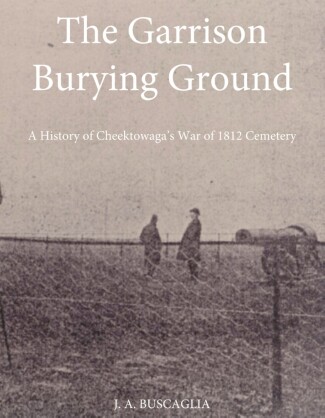
The complete history of the War of 1812 Cemetery on Aero Drive — including archival deeds, military hospital records, aerial overlays, and eyewitness accounts — is available in this book by J. A. Buscaglia.
View on Amazon →Please direct all inquiries to J. A. Buscaglia
research@jabuscaglia.com